Climate — cool & long
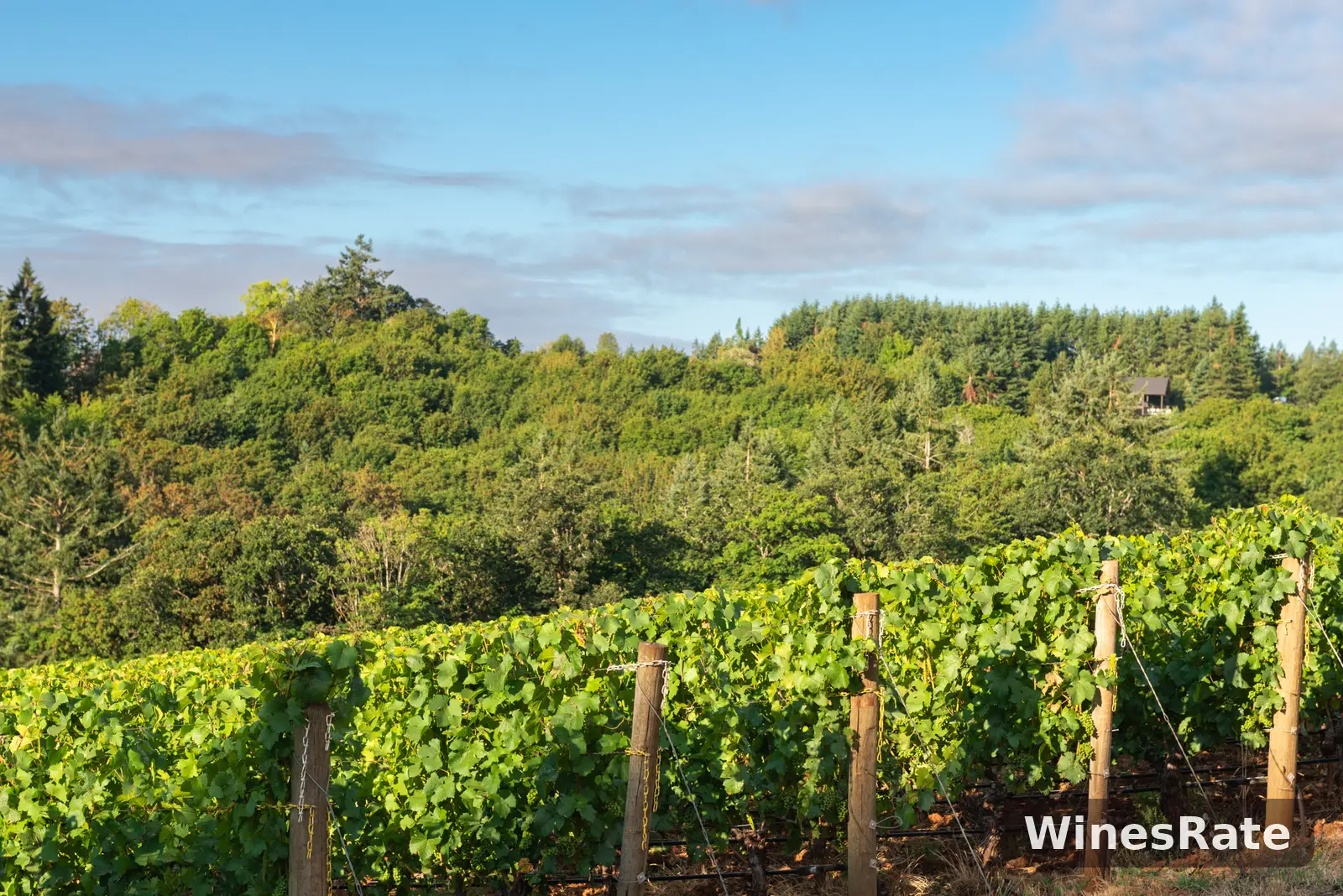
The valley is defined by a cool climate, diverse soils, rolling hillsides and a long growing season. The grapes ripen slowly, keeping their freshness and acidity — the elegance the valley is known for.
WinesRate Guide
One valley, eleven wine regions inside it, and a grape — Pinot noir — that made Oregon famous. Every fact below was checked against the Willamette Valley Wineries Association, the Salem region's visitor bureau and the wineries themselves on 27 November 2026.
Give it three days, base yourself in one small town, and book ahead. The Willamette Valley is Oregon's signature winegrowing region and one of the world's leading places for Pinot noir — a cool-climate valley stretching from the Portland area south toward Eugene, with more than 700 wineries and 11 nested AVAs. It is not one wine road but a whole region of them, and the wineries are spread across hills rather than lined up along a single street. Pick one or two sub-regions per day, stay in McMinnville, Dundee or Newberg, and arrange a driver or a tour so nobody has to choose between tasting and driving.
What you will taste is cool-climate wine at its most elegant. Pinot noir is the region's calling card — the grape that reflects small differences in climate and site more vividly than any other — and the valley is also widely recognised for Chardonnay, sparkling wine, Pinot gris and Riesling. Come for the Pinot noir; stay for the Chardonnay and the sparkling wine.
One thing to settle before you go: many seated experiences fill up on weekends — plan three tastings a day at most, and book the ones you care about first. Tasting fees vary by winery.
An AVA — an American Viticultural Area — is a legally defined winegrowing region, and the Willamette Valley holds eleven of them nested inside the one big valley AVA. Even small distances within the valley can yield wines of distinctively different character.
| Nested AVA | Established | What the association says about it |
|---|---|---|
| Dundee Hills | 2005 | The first grapes in the valley were planted here; still the most densely planted locale. |
| Yamhill-Carlton | 2005 | North of McMinnville, an AVA centred on the hamlets of Carlton and Yamhill. |
| Chehalem Mountains | 2006 | A single uplifted landmass south-west of Portland. |
| Eola-Amity Hills | 2006 | Shaped by shallow soils and the Van Duzer Corridor — the wind gap channelling Pacific air into the vineyards. |
| Ribbon Ridge | — | One of the six AVAs created by the growers' 2002 petition. |
| McMinnville | 2025 | West of McMinnville, extending 20 miles south-west toward the Van Duzer Corridor. |
| Van Duzer Corridor | 2019 | Effective January 2019 — the wind gap itself, given its own AVA. |
| Tualatin Hills | 2020 | Approved June 2020; home to Oregon's first commercial vineyard. |
| Laurelwood District | 2020 | Approved in June 2020, alongside Tualatin Hills. |
| Lower Long Tom | 2021 | Established November 2021, between Corvallis and Eugene. |
| Mount Pisgah, Polk County | 2022 | Established June 2022, the valley's newest nested AVA. |
🍷 Why the divisions matter: the six original nested AVAs were petitioned for in 2002 by the valley's own vineyards and wineries, because the wines from each place tasted different. Tasting Pinot noir in the Dundee Hills one day and the Eola-Amity Hills the next is the valley's best lesson: the place, not the grape, is doing the talking.
Two places deserve a closer look. The Dundee Hills cover 12,500 acres of an almost exclusively basaltic landmass; more than 2,220 acres of grapes are planted there in about 100 vineyards, roughly 30 miles south-west of Portland and 40 miles east of the Pacific Ocean. The Eola-Amity Hills sit in the path of the Van Duzer Corridor, the gap in the Coast Range that funnels cool Pacific air into the valley.
Start with Pinot noir — it is the reason the valley exists as a wine region — then let the valley's other grapes surprise you.
Pinot noir reflects small differences in climate and site more vividly than any other grape, and the valley's whole point is that those differences are close together. Taste it in the Dundee Hills, on their almost exclusively basaltic soils; in the Eola-Amity Hills, where shallow soils and the Van Duzer Corridor winds shape the wines; and in Yamhill-Carlton, in the foothills of the Coast Range.
Chardonnay is the grape the association singles out alongside Pinot noir: its calendar lists an Oregon Chardonnay Celebration grand tasting on 27 February 2027 at the Allison Inn & Spa. Taste it in the Dundee Hills, where several estates pour it next to their Pinot noir. It is the valley's quiet success story.
Sparkling wine is one of the rising-star styles the association names for the valley, and several estates now make traditional-method sparkling from the same cool-climate fruit as their still wines. A glass of Willamette Valley sparkling is the best aperitif in wine country.
Pinot gris and Riesling are the valley's aromatic whites — fresh, food-friendly and usually the most affordable pours on a tasting menu. If you are tasting three estates in a day, make one of them a white-wine stop.
Three things — latitude, shelter and soil — make this cool corner of Oregon one of the world's leading places for Pinot noir.
The valley is defined by a cool climate, diverse soils, rolling hillsides and a long growing season. The grapes ripen slowly, keeping their freshness and acidity — the elegance the valley is known for.
Cool-climate grapes suit the valley because of the protection of the Cascade Mountains to the east and the Coast Range to the west. The gaps between them — above all the Van Duzer Corridor — let in just enough cool Pacific air.
The valley's soils are famously varied: the Dundee Hills sit on an almost exclusively basaltic landmass, Yamhill-Carlton works older sedimentary soils, and the Eola-Amity Hills are shaped by shallow soils over rock. Same grape, different dirt, different wine.
With more than 700 wineries and a strong culture of collaboration and stewardship, the valley's wine country experience is rooted in place, craft and community, in the association's words.
Three days is the right introduction: one day in the Dundee Hills, one day around Salem and the Eola-Amity Hills, and one day in McMinnville. The itineraries below follow the Salem region's own visitor bureau.
Start in the Dundee Hills, the valley's most densely planted ground and the place its first grapes were planted. Book a seated tasting at Sokol Blosser in Dayton — the family-owned estate founded in 1971, pouring its estate Pinot noir, Chardonnay and other varietals. The tasting runs 75 minutes and starts at $40 for a flight of four wines, waived with a two-bottle purchase. End the day in Dundee or Newberg, the two small towns at the foot of the hills.
Head south to Salem and the Eola-Amity Hills. The visitor bureau's itineraries start at Willamette Valley Vineyards, six miles east of Salem, with sweeping views and tastings of red, white, sparkling and rosé, and at Björnson Vineyard in the Eola-Amity Hills, where the cool Van Duzer winds make smaller berries with concentrated flavour. West of Salem, the Van Duzer Corridor's estates — Van Duzer Vineyards, Andante, Benedetto and Illahe — pour small-batch estate wines a short drive apart. Finish in Salem at Honeywood Winery, Oregon's oldest winery, for a tasting of Marionberry wine or mead.
Base your last day in McMinnville. Spend the morning in the Chehalem Mountains to the north, then come back to town: McMinnville sits among the northern AVAs — Yamhill-Carlton lies just north of the city, and the Dundee Hills are nearby — and its centre is the natural place to eat, buy the bottles you tasted all week, and plan the return trip.
The association's calendar and the Salem visitor bureau point to three moments worth planning around.
May is Oregon Wine Month, and the Salem visitor bureau notes that many wineries hold special events through the month. The vines are green, the weather is warming, and the tasting rooms are in full swing without the harvest crowds.
Summer and early autumn are peak season: warm, dry weather, long evenings, every tasting room open. Harvest season in the autumn is the valley's busiest time — book ahead.
Wine Country Thanksgiving — open-house events across the valley from 26 to 29 November — is what the Wineries Association calls an Oregon tradition: wineries open their doors for the long weekend with special tastings and events. It is the valley's biggest annual open house.
Winter is the valley's quiet season: the tasting rooms are empty, the hosts have time to talk, and the association's calendar fills with focused events — Behind the Blend, an interactive tasting on 13 February 2027, and the Oregon Chardonnay Celebration grand tasting on 27 February 2027. Note that some tasting rooms cut their hours in winter: Sokol Blosser is open Thursday to Monday from November to February.
Tasting prices below are from the winery's own site, checked 27 November 2026. Transport advice is from the Wineries Association's own touring page.
Before you go, browse the regions you'll be tasting: start from the WinesRate homepage, explore wine regions — 190 regions across 17 countries, catch up in the WinesRate Journal, and check what bottles cost back home in our wine retail price reports. WinesRate doesn't sell alcohol and publishes no ratings or scores — just real prices from real stores.
The questions readers ask about the Willamette Valley, answered from the verified details above.
The Willamette Valley is Oregon's signature winegrowing region — a cool-climate valley from the Portland area south toward Eugene, between the Coast Range and the Cascades. It is one of the world's leading places for Pinot noir, with more than 700 wineries and 11 nested AVAs inside the one valley AVA.
Pinot noir is the region's calling card — the grape that reflects small differences in climate and site more vividly than any other. The valley is also widely recognised for Chardonnay, sparkling wine, Pinot gris and Riesling.
It varies by winery — check each estate's own site. As a verified example, Sokol Blosser's Estate Tasting starts at $40 per person for a flight of four wines, lasts 75 minutes, and is waived with a minimum purchase of two bottles. Three tastings a day at that rate would be $120 per person before waivers.
Reservations are highly recommended, especially on weekends. Seated experiences fill up, so plan three tastings a day at most. At Sokol Blosser, walk-ins are welcome based on availability — but a reservation guarantees your table.
It is difficult. The Wineries Association says plainly that public transport within wine country is limited, and taxis and ride-share can be hard to find in rural areas. The practical options are a wine tour company — guides, transport and a designated driver included — or a rental car.
May is Oregon Wine Month, with special events at many wineries, and summer into early autumn is peak season. Harvest season in the autumn is the busiest time, so book ahead. The Wine Country Thanksgiving open houses run 26–29 November, and winter brings quieter tasting rooms and the Oregon Chardonnay Celebration on 27 February 2027.
Checked on 27 November 2026 against the official sources below:
The topic came from current social and trade conversation about American wine regions to visit. This page is original WinesRate content: every word was written for WinesRate, all facts were re-verified from the sources above, and no text, image or video was copied from any post or creator. The only photograph used is the CC BY 4.0 Wikimedia Commons image credited in the hero. WinesRate does not sell alcohol and publishes no ratings or scores.
This guide lives at winesrate.com/discover/willamette-valley-wine-country/ · Prepared 27 November 2026.